
What’s the difference between a Crossover and an SUV?
In most cases, the SUV vs Crossover debate is a worthy one because, to simplify the answer: it’s all about the platform. While consumers and automakers alike use the terms “SUV” and “Crossover” ever more interchangeably (which makes sense when you consider the styling similarities they share), key differences do exist.
SUV vs Crossover
In a nutshell, Crossovers are built on a car platform and are, therefore, lighter as a unit. The SUV, by comparison, is heavier as it is built on a truck chassis. In reality, however — and especially in the Subaru context — it’s a little more involved than that; there are additional things to help you differentiate between these two unique vehicle types.
What is an SUV?
SUVs are typically built for rougher terrains, so they are larger in size (classified as mid-sized or full-sized). When comparing the SUV vs Crossover structurally, the SUV frame and base are built separately and then joined together during the manufacturing process. They’re more rugged and are often the go-to choice when looking to tow heavier cargo. But that’s not to say that towing with a Crossover should be ruled out.
What is a Crossover car?
Crossovers usually range from sub-compact to full-sized. That said, manufacturers will often refer to a crossover as a “small-sized SUV” or “compact SUV.” A crossover’s body and frame are built in a single piece which enhances the ride quality and — because it is lighter — also helps with fuel efficiency.
Which is better, SUV or Crossover?
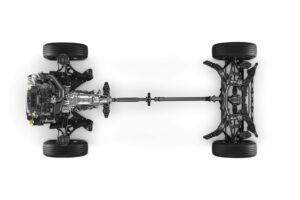
When it comes to the Subaru XV, be assured that it boasts all the perfect ingredients synonymous with our brand: a flat-four engine, Symmetrical All-Wheel Drive (SAWD) and its permanent heavy-split (the XV is a 60/40 front/rear bias — though this time it’s on a brand-new platform).
Size-wise, it packs the punch of a large hatchback with impressive ground clearance to boot.
It would be remiss of us to leave out the safety aspects that are standard with both SUVs and our Crossover. You get:
- EyeSight Driver Assistance Systems
- Pre-Collision Braking System
- Adaptive Cruise Control
- Pre-Collision Throttle Management
- Lane Departure Sway Warning
- Ring-Shaped Reinforcement
- Symmetrical All-Wheel Drive System
- Reverse Automatic Braking
- Blind Spot Monitor with Lane Change Assist
- Rear Cross Traffic Alert
- Seven Airbags
…and so much more!
When people make the SUV vs Crossover comparison, they often think that the SUV trumps the Crossover when it comes to those who want to take their off-roading seriously. As formidable players in the SUV category, we’d happily back this statement (under other circumstances), and proudly ready the Subaru Outback or the Subaru Forester for your off-road challenges.
But like having to choose a favourite child… know that the Subaru XV can manage much more than its competitors when it comes to off-road handling and safety (plus it’s slick and ready to do road trips, work trips, and take its spot front-and-centre in the school parking lot at the annual PTA meeting).
If you’re looking for a vehicle with lots of space or towing and off-roading capability, then an SUV might be a good fit for you. If not, a crossover might be the better choice. Still unsure? Come and experience Confidence in Motion for yourself, book a test drive or find your local dealership and come in for a chat.
And if you’d prefer to stay home and talk about anything Subaru with one of our helpful representatives, call our Customer Care Department on +27 11 608 0116.
Frequently Asked Questions (FAQs)
What is the main difference between an SUV and a crossover?
The key difference comes down to platform and construction. An SUV is built on a truck chassis, with the frame and body built separately and then joined together, making it heavier and more rugged. A crossover is built on a car platform, with its body and frame built as a single piece, making it lighter, more fuel-efficient, and smoother to ride in.
Is a crossover just a smaller or compact SUV?
Not exactly, though manufacturers often market crossovers as “compact SUVs” or “small SUVs” because of overlapping size ranges and similar styling. Crossovers span sub-compact to full-sized, but the defining difference remains the unibody (car-platform) construction versus an SUV’s separate body-on-frame build.
Which is better for towing and off-roading, an SUV or a crossover?
SUVs are generally the stronger choice for towing heavier loads and tackling rougher, off-road terrain, thanks to their body-on-frame construction. That said, towing with a crossover shouldn’t be ruled out, and Subaru’s Crosstrek is built to handle more off-road driving and safety capability than most competitor crossovers.
What safety features come standard on Subaru’s SUVs and crossovers?
Subaru’s SUV and crossover range shares the same core safety suite, including EyeSight Driver Assistance, Pre-Collision Braking, Adaptive Cruise Control, Pre-Collision Throttle Management, Lane Departure Sway Warning, Ring-Shaped Reinforcement, Symmetrical All-Wheel Drive, Reverse Automatic Braking, Blind Spot Monitor with Lane Change Assist, Rear Cross Traffic Alert, and seven airbags.
Is the Subaru Crosstrek an SUV or a crossover?
The Subaru Crosstrek (previously badged the XV) is Subaru’s crossover model. It’s built on a car platform with the size and feel of a large hatchback, but with Symmetrical All-Wheel Drive and elevated ground clearance that let it handle more off-road driving and safety capability than most competitor crossovers.
Should I choose an SUV or a crossover?
If you need lots of space, towing capacity, or serious off-road capability, an SUV such as the Subaru Outback or Forester is likely the better fit. If you want car-like ride comfort, better fuel efficiency, and easier everyday driving, a crossover like the Subaru Crosstrek may suit you better.
